The Magic of Midsummer Night Traditions Across Europe in 2026
4 September 2026
There is a particular moment in late June when the sun seems to hesitate before dipping below the horizon, as if it too is reluctant to let the day end. In northern Europe, that hesitation stretches into something almost supernatural: a twilight that never quite becomes night, a pale glow that lingers until the early hours. This is midsummer, a time that predates Christianity, modern nation-states, and even agriculture itself. And in 2026, as travelers increasingly seek out experiences that feel rooted in something older and more meaningful, the midsummer traditions of Europe offer something that no app or algorithm can replicate: a genuine connection to place, community, and the rhythms of the natural world.
But here is the honest truth: not all midsummer celebrations are created equal, and not every destination delivers the magic that its promotional photos suggest. Some are deeply authentic but difficult to access. Others are spectacular but overcrowded to the point of losing their soul. And a few are outright tourist traps dressed in flower crowns. This article is about understanding the difference, planning intelligently, and knowing what to expect before you book that flight.
Why Midsummer Matters More Than Ever
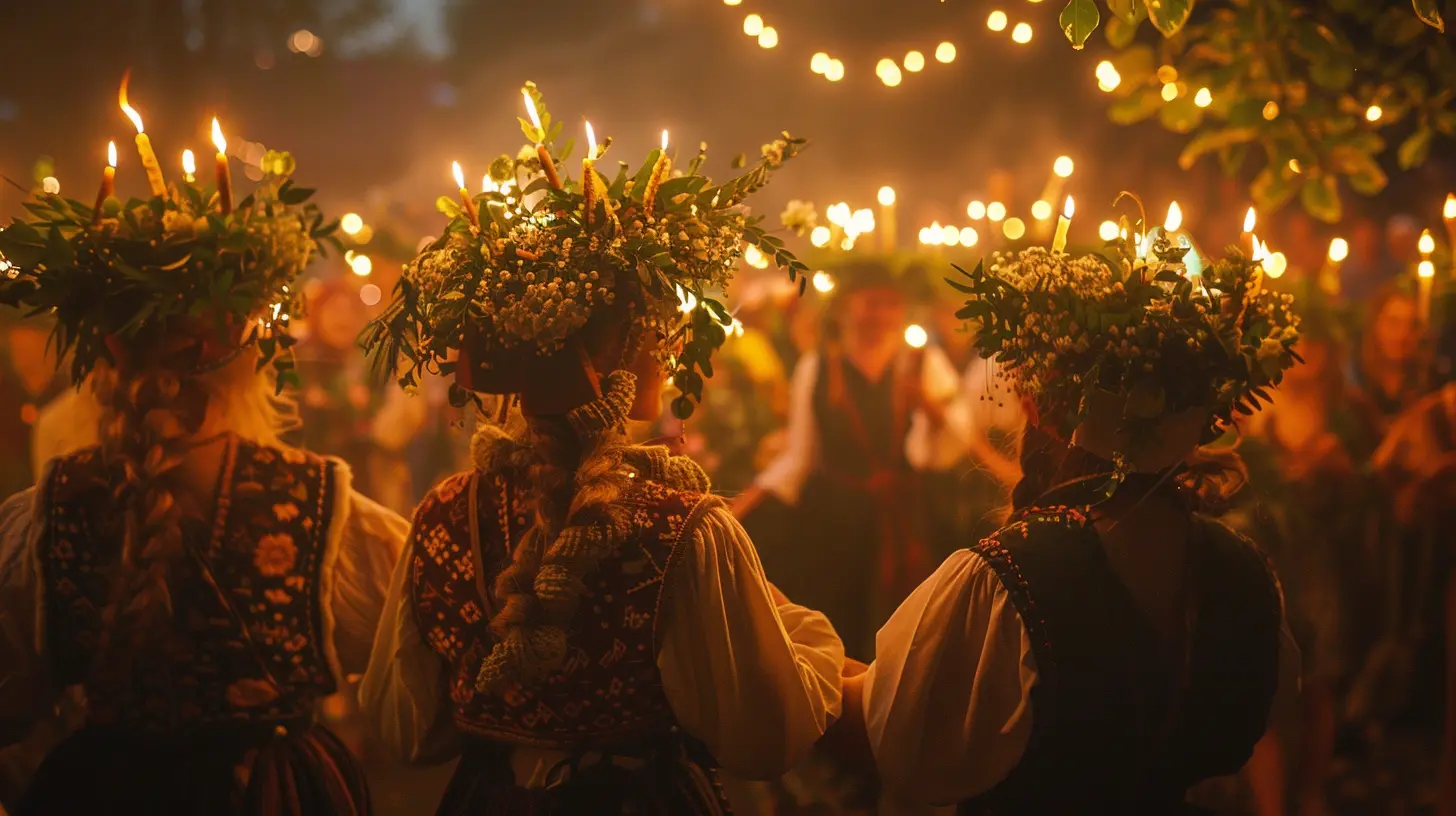
The summer solstice, which falls on June 21 in 2026, marks the longest day of the year in the Northern Hemisphere. But the traditions surrounding it are not really about astronomy. They are about survival, fertility, and community bonds formed over centuries of shared hardship and celebration. Before electric lights, before central heating, before the concept of vacation time, midsummer was a critical turning point. The harvest was not yet in, but the days were long enough to work the fields. It was a moment to pause, to feast, to court, and to hope.In 2026, the appeal is different but no less powerful. We live in a world of constant connectivity, where every moment is documented and every experience is mediated through screens. Midsummer traditions, at their best, demand presence. They involve fire, water, flowers, music, and dancing. They require you to be physically there, not just virtually aware. This is why interest in midsummer travel has surged in recent years, and why 2026 is shaping up to be a particularly busy season for destinations across Scandinavia, the Baltics, and parts of Central and Eastern Europe.
The practical implication is simple: if you want to experience these traditions properly, you need to plan months in advance, not weeks. Accommodation in smaller towns and villages sells out early, and the most memorable celebrations are often not the ones listed in guidebooks.
The Nordic Heartland: Sweden and Finland
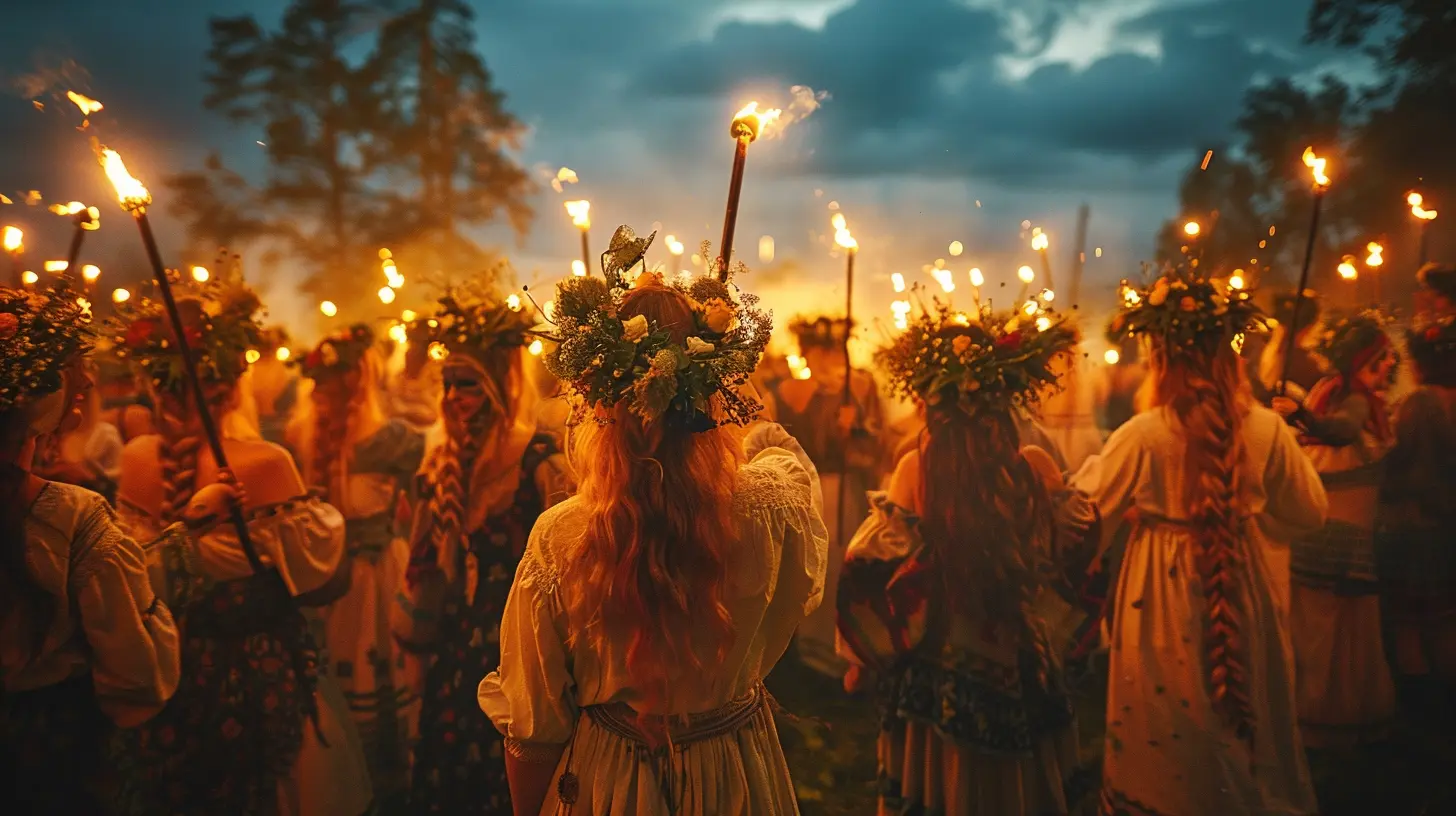
When most people think of midsummer, they picture Sweden. And for good reason. The Swedish celebration, known as Midsommar, is arguably the most elaborate and deeply embedded in national identity. It is a public holiday that falls on the Friday between June 19 and June 25, which means in 2026 it will be observed on Friday, June 19. This is worth noting because many visitors assume it always falls on the solstice itself. It does not.The centerpiece of Swedish midsummer is the maypole, or midsommarstang, which is decorated with greenery and flowers and raised in a communal field or village green. Families and friends gather around it to dance to traditional songs, many of which involve imitations of frogs or other animals. The most famous, Små grodorna, is beloved by children and bewildering to foreigners, which is exactly the point. It is not a performance for tourists. It is a shared ritual that bonds generations.
What most visitors do not realize is that the real Swedish midsummer is a private affair. The big public celebrations in places like Stockholm's Skansen open-air museum are enjoyable, but they are a curated version of the real thing. The authentic experience happens in someone's summer cottage by a lake, with herring, new potatoes, sour cream, chives, and strawberry cake. Unless you have a Swedish friend or family member, you will likely miss this. That is not a reason to skip Sweden, but it is a reason to adjust your expectations.
Finland offers a different but equally compelling version. The Finnish midsummer, or Juhannus, is centered around the sauna, the bonfire (kokko), and the lake. Many Finns leave cities for summer cottages, and the holiday has a more contemplative, nature-focused feel than the Swedish party atmosphere. In 2026, the Finnish midsummer will be celebrated on Saturday, June 20, the day after the Swedish holiday. This proximity is actually convenient for travelers who want to experience both countries in one trip, though it also means that flights and ferries between Stockholm and Helsinki or Turku will be heavily booked.
The Finnish tradition of lighting large bonfires on lakeshores or islands dates back to an old belief that the fire would keep evil spirits away and ensure a good harvest. In modern times, it has become a spectacular visual event, especially in the Lakeland region around Tampere and Jyväskylä. But here is a practical tip: the bonfires are often lit at dusk, which in Finland in late June means around 11 PM. Do not expect to be back at your hotel by midnight. If you are traveling with young children, this can be challenging.
The Baltic Perspective: Estonia, Latvia, and Lithuania
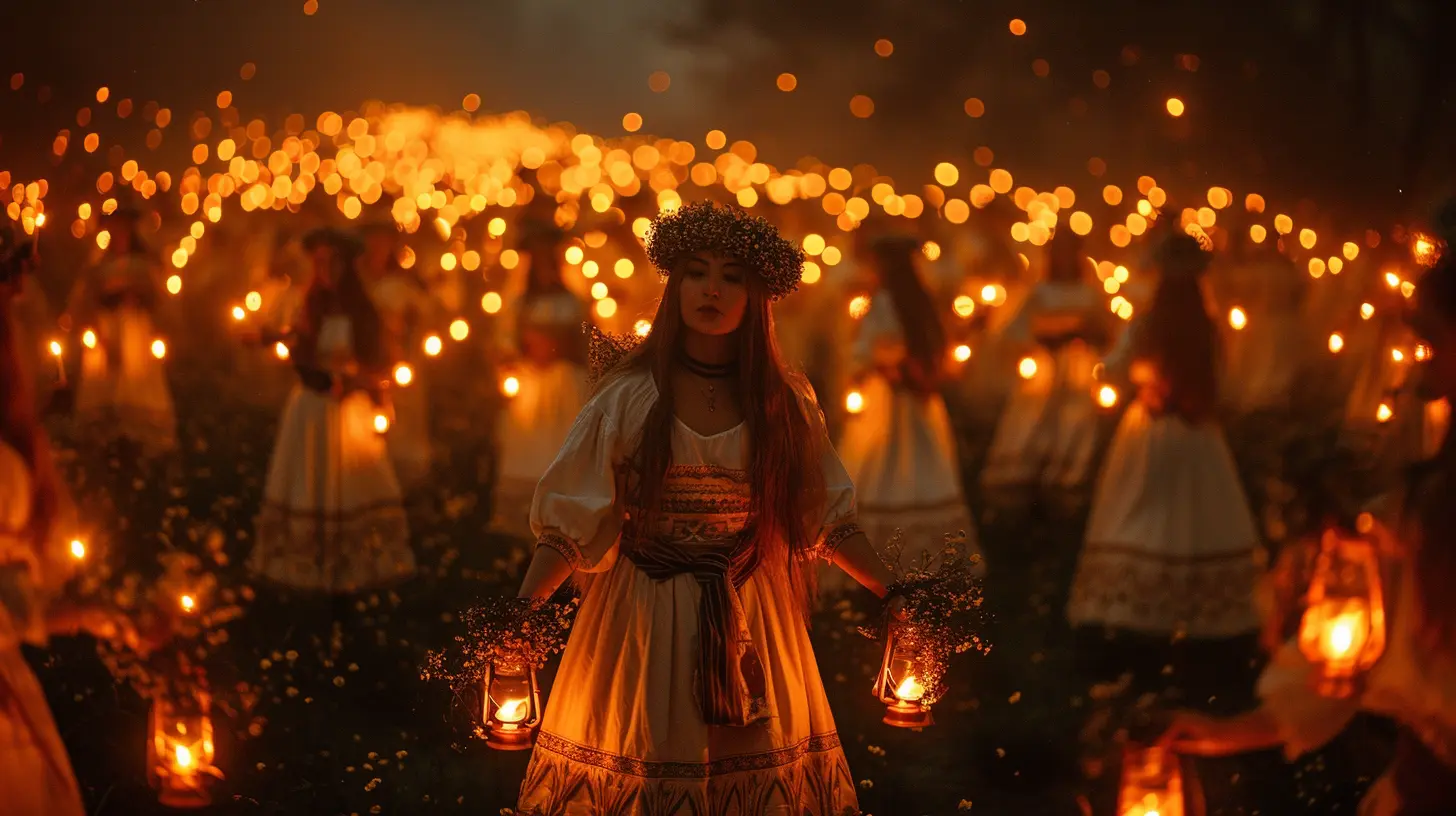
The Baltic states offer some of the most genuine and least commercialized midsummer experiences in Europe, precisely because they are less known to international tourists. In Estonia, the celebration is called Jaanipäev, and it is arguably more important to national identity than Independence Day. Estonians take the holiday seriously, often leaving cities for family farms or coastal villages. The traditions include bonfires, singing, and the consumption of vast quantities of grilled food and beer.What makes the Estonian celebration distinct is its connection to ancient folklore. The bonfire, or jaanituli, is believed to have protective powers, and jumping over the flames is a traditional way to ensure good luck and health. In some rural areas, young people still follow the old custom of staying awake all night, because it is said that the person who stays awake until dawn will have strength and vitality for the entire year.
Latvia and Lithuania have their own variations. In Latvia, the festival is called Jāņi, and it is a two-day celebration from June 23 to June 24. The Latvian tradition is heavily focused on the gathering of herbs and flowers, which are believed to have special healing properties when picked on Midsummer Eve. Women traditionally wear wreaths of flowers and leaves, and men wear wreaths made of oak leaves. The singing of folk songs, or dainas, is central to the celebration, and the sheer volume of verses that older Latvians can recite from memory is astonishing to outsiders.
Lithuania celebrates Joninės, also known as Rasos, on June 23 and 24. The celebration includes bonfires, flower wreaths floated on rivers, and searches for the mythical fern flower, which is said to bloom only on this night and to grant its finder special powers. The fern flower legend is a wonderful example of how these traditions encode meaning. The fern does not actually bloom, so the search is a metaphor for the pursuit of wisdom and the recognition that some treasures are found not in grasping but in seeking together.
The trade-off for visiting the Baltics is clear: you will get a more authentic and less crowded experience than in Sweden or Finland, but you will also face more practical challenges. English is widely spoken in the cities but less so in rural areas. Public transport is limited on the holiday itself, and many restaurants and shops close. If you go, rent a car, book accommodation well in advance, and be prepared to be flexible.
Central and Eastern Europe: Beyond the Nordic Stereotype
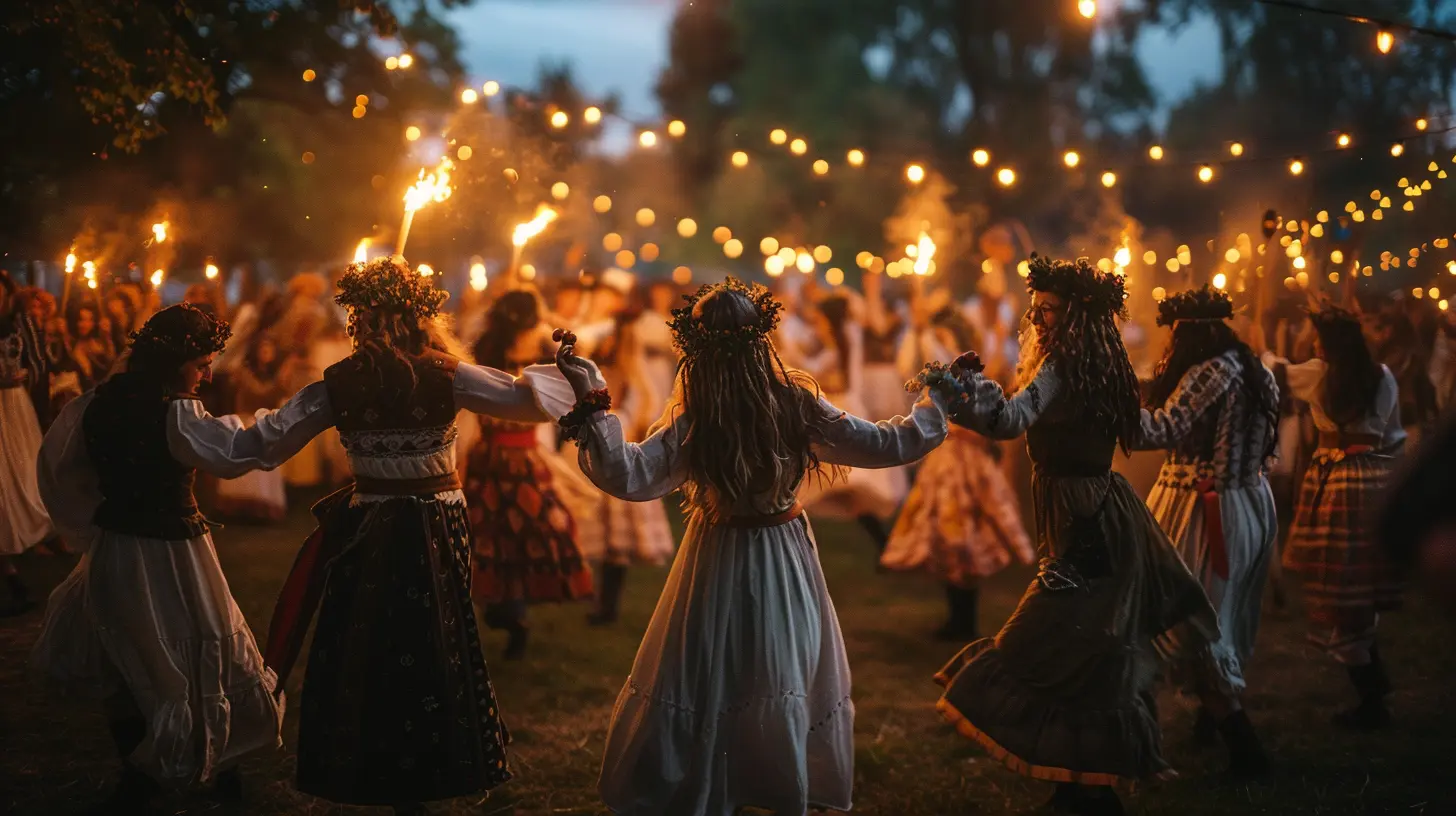
Many travelers forget that midsummer traditions extend well beyond Scandinavia and the Baltics. In Poland, the celebration is called Noc Świętojańska, or St. John's Night, and it falls on June 23. The most famous celebration takes place in Krakow, where the Vistula River becomes the stage for thousands of floating wreaths, each carrying a small candle. The tradition is linked to the old Slavic festival of Kupala, which celebrated love, fertility, and the power of water.The Polish version is more romantic and melancholic than the Nordic ones. Girls traditionally wrote their hopes for love on the wreaths and released them into the river, where young men would try to catch them. If a man caught a wreath, it was said that the couple would marry within a year. In modern Krakow, the event has become a large public festival with concerts and fireworks, but the wreath-floating ceremony remains its emotional core.
Ukraine and Belarus preserve some of the most ancient forms of the Kupala celebration, though travel there in 2026 carries obvious practical and safety considerations that I will not minimize. If conditions permit, and if you have appropriate local knowledge, the Kupala Night celebrations in rural western Ukraine or the Polesia region of Belarus offer a glimpse of pre-Christian Slavic culture that is almost impossible to find elsewhere. Young people jump over bonfires in pairs, holding hands, as a test of their commitment. Girls wear wreaths of wormwood and periwinkle. The atmosphere is intense, earthy, and deeply moving.
For most travelers, however, the more accessible option is the Czech Republic or Slovakia, where the celebration is known as Svatojánská noc. The Czech version is quieter and more focused on water and springs, reflecting the country's deep tradition of folk Catholicism mixed with older pagan beliefs. In small villages along the Vltava River, locals still light bonfires on hilltops and bless the water sources that sustain their communities.
The Southern Edge: Spain, Portugal, and Italy
The further south you go, the more midsummer becomes associated with fire and purification rather than with the endless daylight of the north. In Spain, the celebration is called La Noche de San Juan, and it is particularly spectacular along the Mediterranean coast. The night of June 23 is marked by bonfires on the beaches, fireworks, and the ritual of jumping over flames. In Alicante, the entire city becomes a festival of fire sculptures called hogueras, which are elaborate works of art that are burned at midnight in a cathartic release.The Spanish celebration has a very different character from the Nordic one. It is loud, social, and urban. In Barcelona, thousands of people gather on the beaches of Barceloneta and Bogatell. They bring food and drink, light small fires, and write their worries on pieces of paper that they then toss into the flames. At midnight, it is traditional to jump over the fire three times and then run backwards into the sea, ideally with your back to the waves, to complete the purification ritual.
Portugal has its own version, called the Noite de São João, which is celebrated on June 23 in Porto with particular fervor. The streets of the Ribeira district fill with people carrying plastic hammers or leeks, which are used to gently bonk strangers on the head. This strange tradition is said to bring good luck, and in the chaos of the crowd, it is taken in good spirits. The celebration includes grilled sardines, red wine, and the release of sky lanterns, which creates a breathtaking sight over the Douro River.
Italy's midsummer, La Notte di San Giovanni, is more subdued but still meaningful. In Florence, the celebration on June 24 coincides with the feast of the city's patron saint, John the Baptist. The day includes a historic football match in medieval costume and a spectacular fireworks display over the Arno River. In smaller towns, the tradition of collecting dew on the morning of June 24 is still observed. The dew is believed to have cosmetic and healing properties, and women traditionally wash their faces in it to preserve their beauty.
The key difference between the southern and northern celebrations is timing. In the south, the night is genuinely dark, even in late June. The bonfires are not a symbolic substitute for the sun but a real source of warmth and light against the cool sea breeze. This changes the entire atmosphere. The southern celebrations feel more like a carnival, while the northern ones feel more like a vigil.
Practical Planning for 2026
If you are serious about experiencing midsummer traditions in 2026, start planning now. Here are the considerations that matter most.First, decide what kind of experience you want. If you want spectacle and convenience, choose a city celebration like Stockholm, Copenhagen, or Barcelona. If you want authenticity and are willing to accept some discomfort, choose a rural destination in Estonia, Latvia, or Finland. If you want a balance, consider Krakow or Porto, where the traditions are real but the infrastructure for visitors is well developed.
Second, book accommodation at least four to six months in advance. Midsummer is the single busiest travel weekend of the year in many of these countries. Hotels, guesthouses, and rental apartments in small towns fill up by early spring. If you are planning to stay in a summer cottage, which is the most authentic option in Scandinavia and Finland, you may need to book even earlier.
Third, understand the transport situation. On the actual holiday, most public transport operates on a reduced schedule, and some rural routes stop entirely. In Sweden, many people travel to the countryside on the Wednesday or Thursday before midsummer, and the roads are congested. If you are driving, expect delays and plan for extra time. In Finland, the situation is similar, and it is common for people to leave the cities as early as Wednesday.
Fourth, think about food. Traditional midsummer meals are specific and often not available outside the holiday period. In Sweden, you must try herring, new potatoes, and strawberries. In Finland, the equivalent is grilled sausage, new potatoes, and a dairy dessert called vispipuuro. In Poland, the celebration often includes a sour rye soup called żurek. These foods are not just sustenance; they are part of the ritual. Do not skip them.
Fifth, respect the local customs even if they seem strange. Jumping over a bonfire is not a theme park attraction. It is a serious act with deep cultural roots. If you participate, do so with sincerity. If you are not comfortable participating, stand back and observe quietly. Do not laugh at the customs or treat them as entertainment. Locals are generally welcoming to visitors who show genuine interest, but they are rightly offended by those who treat their traditions as a spectacle.
Common Mistakes and Misconceptions
One of the most common mistakes travelers make is assuming that midsummer is the same everywhere. It is not. The Swedish maypole dance and the Spanish beach bonfires share a common origin but have evolved in completely different directions. Do not expect to see the same rituals in Portugal that you saw in Sweden. Embrace the differences instead.Another mistake is arriving on the wrong date. As mentioned, the Swedish midsummer is always a Friday, while the Finnish celebration is always a Saturday. The Baltic celebrations follow the Catholic feast of St. John, which is June 24. The Spanish and Portuguese celebrations are on the night of June 23. If you arrive a day late, you will have missed the main event. Double-check the exact dates for your specific destination.
A third mistake is underestimating the importance of the weather. Midsummer in northern Europe is not guaranteed to be warm or sunny. In Finland, it rains on roughly one in three midsummer weekends. In Sweden, the temperature can be as low as 10 degrees Celsius. Pack layers, waterproof clothing, and insect repellent. The mosquitoes in the Finnish Lakeland in late June are not a minor inconvenience; they are a serious factor that can ruin an otherwise perfect evening. Do not underestimate them.
A fourth mistake is expecting a wild party everywhere. The Swedish midsummer is actually a family holiday. The drinking is significant but not excessive compared to, say, a Spanish festival. The Finnish celebration is even more subdued, with long periods of silence around the bonfire as people reflect on the light and the season. If you are looking for a rave, you have chosen the wrong event.
The Deeper Meaning and Why It Matters
At its core, midsummer is about the human need to mark time, to celebrate survival, and to strengthen the bonds that hold communities together. In an era when so much of our lives is virtual and fragmented, these traditions offer something rare: a chance to be physically present with others, to share food and fire, and to acknowledge the natural cycles that sustain us.The magic of midsummer is not in the flowers or the flames themselves. It is in the act of gathering, of participating in something older than any individual, and of feeling, even for a moment, that you are part of a chain that stretches back centuries. In 2026, that feeling is more valuable than ever.
So choose your destination carefully, plan ahead, and go with an open mind. The sun will set late, the bonfires will burn, and if you are lucky, you will catch a glimpse of something that no photograph can capture. That is the real magic, and it is waiting for you.
all images in this post were generated using AI tools
Category:
Cultural CelebrationsAuthor:

Shane Monroe
Discussion
rate this article
2 comments
Yasmeen Kelly
Midsummer night traditions bring a unique charm to European culture. The festivities are vibrant and full of life, offering travelers a chance to experience local customs, delicious food, and unforgettable moments.
September 27, 2026 at 3:52 AM
Shane Monroe
Absolutely! Midsummer nights truly capture the essence of European culture, blending lively traditions with unforgettable experiences. It's a celebration that leaves a lasting impression.
Joel Adkins
Midsummer traditions in Europe reveal a rich tapestry of culture and history. Each festival, with its unique customs and vibrant celebrations, invites travelers to connect deeply with local communities and experience the enchanting spirit of summer nights. Embrace the magic.
September 5, 2026 at 2:38 AM
Shane Monroe
Absolutely! Midsummer truly showcases the beauty of cultural diversity. It's a time to celebrate, connect, and experience the warmth of community under the summer sky. Embracing these traditions enriches our understanding of the enchantment that summer nights hold.