The Minimalist Guide to Backpacking Smart in 2026
8 May 2026
Let me be honest with you right off the bat: I have packed for trips like a complete disaster more times than I care to admit. I remember hauling a 60-liter pack through Southeast Asia with three pairs of jeans, a hardcover novel, and a hair dryer I never used. I looked like a turtle that had given up on life. It was stupid. It was heavy. And it taught me everything I needed to know about the opposite of minimalist travel.
So when I say "backpacking smart in 2026," I am not talking about some trendy, Instagram-filtered version of travel where you carry a silk scarf and a single designer sandal. I am talking about real, gritty, practical minimalism that saves your back, your wallet, and your sanity. The kind that lets you walk into a hostel at 11 PM without sweating through your shirt. The kind that lets you pivot your plans on a dime because you are not anchored to a bag full of "what ifs."
We are heading into 2026, and the game has changed. Gear is lighter. Technology is smaller. And the biggest mistake most people still make is overpacking their fears. Let me walk you through how to strip your load down to the essentials and still feel prepared for anything.
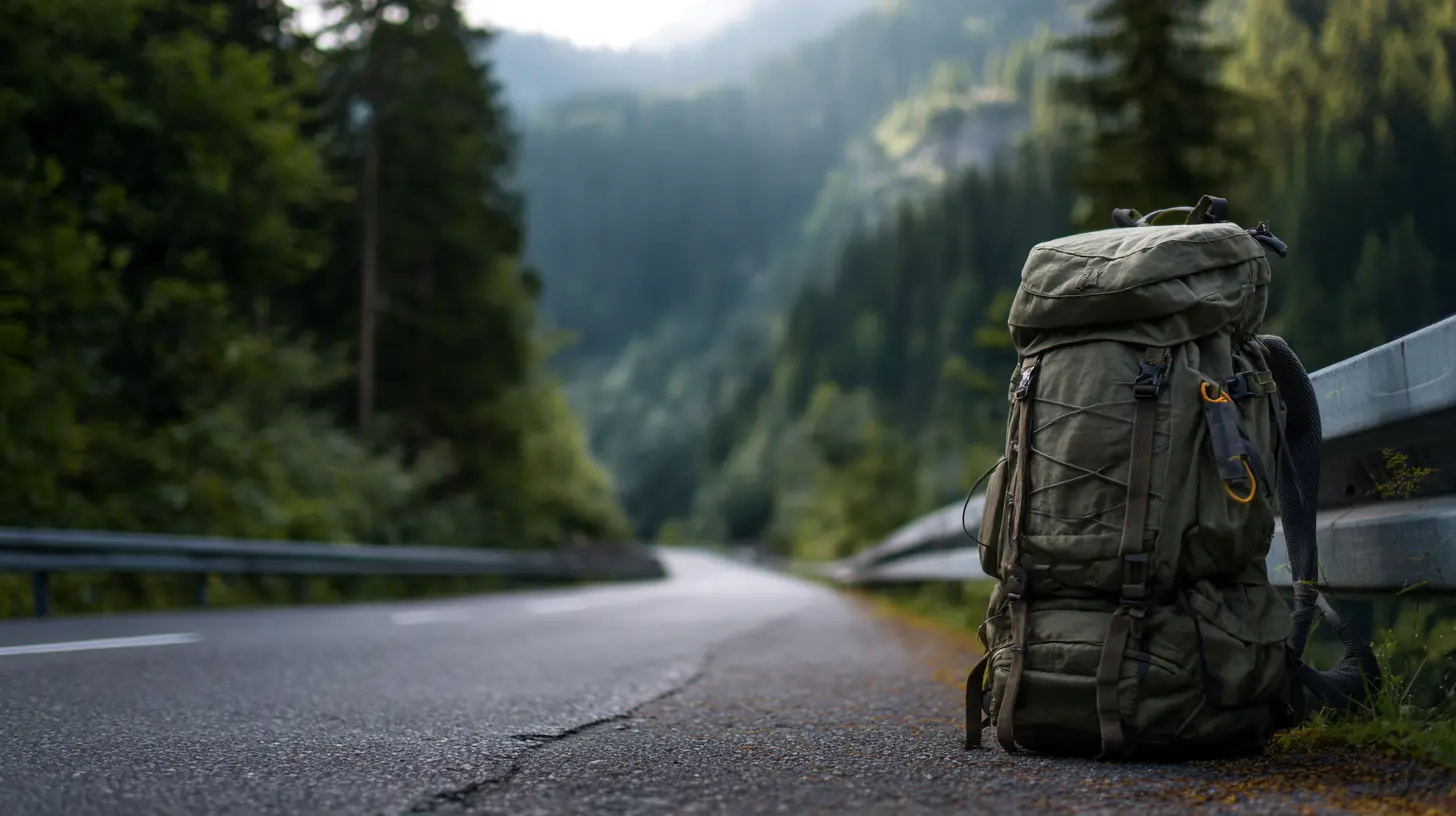
Why Minimalist Backpacking Is Not About Suffering
A lot of people hear "minimalist" and picture themselves wearing the same pair of underwear for a week straight while eating cold beans out of a can. That is not minimalism. That is poor planning. True minimalist backpacking is about carrying exactly what you need, nothing more, nothing less. It is about freedom from stuff, not deprivation.Think of your backpack like a toolbox. A carpenter does not bring every single tool they own to every job site. They bring what is needed for the specific task. Your trip is your job site. If you are hiking through Patagonia, you need different tools than if you are cafe hopping in Lisbon. Minimalism forces you to match your gear to your actual itinerary, not your fantasy itinerary.
When you pack light, you move faster. You spend less time fumbling through your bag and more time actually being where you are. You also save money because you can take budget airlines without paying for checked luggage, and you are less likely to buy junk you do not need along the way. It is a self-reinforcing loop of smart decisions.
The 2026 Gear Shift: What Changed
Let's talk about the elephant in the room: technology. By 2026, we have reached a point where your phone can replace about ten separate devices. A modern smartphone with a good camera, offline maps, translation apps, and a decent battery case is essentially a Swiss Army knife for the digital age. You do not need a dedicated GPS, a separate camera, a Kindle, a notebook, and a guidebook. You need a phone and maybe a power bank.Clothing technology has also quietly gotten better. Merino wool blends are now cheaper and more durable than ever. Synthetic quick-dry fabrics are lighter and less smelly. The days of needing a separate outfit for every single day are over. You can pack four or five high-quality pieces and rotate them for weeks without looking like a disaster. The key is layering. A base layer, a mid layer, and a shell can handle everything from a chilly morning in the mountains to a humid afternoon in the city.
And let's not forget the backpack itself. The 2026 market is full of packs that weigh under two pounds but still have smart organization. Look for something in the 35 to 45 liter range. That is the sweet spot. Anything bigger and you will fill it with junk you do not need. Anything smaller and you are playing Tetris with your socks every morning.
The One-Bag Rule: Your New Best Friend
Here is the single most important rule I follow: if it does not fit in one bag, it does not come. That means no daypack strapped to the front, no extra tote bag, no "just in case" duffel. One bag. That is it.Why? Because two bags means you are always juggling. You are always worried about one getting stolen while you focus on the other. You are always that person blocking the train aisle while you reorganize. One bag forces you to make hard choices. And hard choices are what make a good traveler.
I use a 40-liter backpack with a clamshell opening. It opens like a suitcase, which is a game changer for organization. Inside, I use three packing cubes: one for tops, one for bottoms and underwear, and one for miscellaneous items like toiletries and electronics. That is it. I can unpack and repack in under two minutes. I never have to dig to the bottom of my bag for a charging cable. Everything has a home.
The one-bag rule also applies to your personal item. If you fly, your backpack goes in the overhead bin, and your personal item (a small crossbody or sling bag) stays with you for your valuables. That sling bag holds your passport, phone, wallet, and maybe a snack. It is not a second bag for clothes. Keep it tight.
The Capsule Wardrobe That Works Anywhere
I am going to give you a packing list that has served me through a month in Europe, two weeks in Japan, and a rainy week in Iceland. Adjust based on climate, but the principle stays the same: fewer items, more versatility.- 3 shirts (one long sleeve, two short sleeve, all neutral colors that mix and match)
- 2 pairs of pants (one quick-dry hiking pants, one casual chinos or travel jeans)
- 1 pair of shorts (can double as swim trunks if needed)
- 5 pairs of underwear (quick-dry synthetic or merino)
- 3 pairs of socks (wool blend, no cotton)
- 1 lightweight fleece or hoodie
- 1 packable rain jacket (this is non-negotiable)
- 1 pair of comfortable walking shoes (low-top hiking shoes or trail runners)
- 1 pair of sandals or flip-flops (for showers and lazy evenings)
- 1 baseball cap or sun hat
- 1 lightweight scarf or buff (multipurpose: pillow, towel, face cover, fashion accessory)
That is it. You can wash clothes in a sink or a laundromat. You do not need a different outfit for every day. Nobody cares if you wore the same shirt twice. In fact, most travelers will not even notice. The freedom of not caring about fashion while traveling is one of the most underrated joys.
Toiletries: The Tiny Bottle Trap
Toiletries are where most people lose their minds. They buy those cute little TSA-approved bottles and fill them with everything from hair serum to foot cream. Stop. Think about what you actually use every single day. Not what you might use. What you use.My toiletry kit fits in a quart-size bag and contains: a solid shampoo bar (lasts forever, no liquid rules), a small tube of toothpaste, a bamboo toothbrush, a razor, deodorant, and a small container of moisturizer with SPF. That is it. If I need something specific like insect repellent or sunscreen, I buy it at my destination. It is cheaper and easier than carrying it across borders.
Also, ditch the full-size towel. Get a microfiber travel towel. It is small, dries fast, and does not smell like a wet dog after three days. You will thank me when you are in a hostel bathroom at 6 AM.
The Tech Kit: Keep It Simple
In 2026, you do not need a laptop unless you are working remotely. If you are, fine, bring a lightweight ultrabook. But if you are just traveling for fun, leave the laptop at home. Your phone can handle emails, booking, maps, and even basic photo editing.Here is my tech kit: phone, power bank (10,000 mAh, enough for two full charges), charging cable, universal adapter (the kind with multiple plugs and USB ports), and a pair of wired earbuds. Yes, wired. They never need charging, they sound fine, and you will not cry if you lose them. Bluetooth earbuds are great until they die in the middle of a long bus ride.
If you are bringing a camera, keep it small. A mirrorless camera with one versatile lens is plenty. Do not bring a full DSLR kit unless photography is your main goal. And if you are just taking photos for memories, your phone camera is probably good enough. The best camera is the one you actually have with you, not the one buried at the bottom of your bag.
Mindset: The Real Packing List
Here is the part nobody talks about. Minimalist backpacking is not just about physical stuff. It is about mental clutter. You need to pack your expectations as carefully as you pack your socks.Do not plan every single day. Leave room for spontaneity. If you have a rigid itinerary, you will carry the weight of disappointment when things go wrong. And things will go wrong. Trains get delayed. Hostels overbook. Weather turns. The minimalist traveler rolls with it. They do not have a backup plan for every scenario because they trust their ability to adapt.
Also, pack your patience. Long lines, language barriers, and cultural differences are part of the experience. If you get frustrated easily, you are carrying a heavy emotional load. Travel is not about efficiency. It is about being present. Minimalism helps you stay present because you are not distracted by your stuff or your schedule.
How to Actually Pack the Bag
You have your gear. Now how do you get it all in there without turning into a human pretzel?First, roll your clothes. Rolling saves space and reduces wrinkles. I roll each item tightly and place them in packing cubes. The heaviest items go at the bottom of the bag, closest to your lower back. That keeps the weight centered and prevents you from leaning backward like a turtle on its shell.
Your rain jacket and fleece go on top, easy to grab. Your toiletries go in a side pocket or the top compartment. Your shoes go in a separate bag at the bottom, soles wrapped in a plastic bag so they do not dirty your clothes. Your valuables (passport, wallet, phone) stay in your sling bag, which you wear on the front of your body in crowded areas.
Practice packing and unpacking at home. Do it three times. By the third time, you will know exactly where everything goes. That muscle memory saves you time and stress when you are in a train station with five minutes to catch your connection.
The Hidden Cost of Overpacking
Let me paint you a picture. You are standing at the bottom of a hill in a foreign city. Your backpack weighs thirty pounds. Your shoulders ache. You are sweating. You see a beautiful viewpoint a hundred meters up, but you do not want to climb it because you are already exhausted from carrying your bag. So you skip it. You miss the view. You miss the moment.That is the real cost of overpacking. It is not just the baggage fee or the sore back. It is the missed experiences. The spontaneous detour you did not take. The hike you skipped. The street food you did not try because your hands were full. Minimalism is not about being ascetic. It is about being free enough to say yes to the unexpected.
A Final Word Before You Hit the Road
Backpacking smart in 2026 is not about having the most expensive gear or the lightest tent. It is about knowing yourself. What do you actually need to be comfortable? What can you live without? What fears are you packing that you can leave behind?I have learned that the best travel companions are not the items in my bag, but the mindset I carry. Curiosity. Flexibility. A sense of humor. Those weigh nothing and they make every trip better.
So pack light. Walk fast. Stay open. And remember: the best souvenir you can bring home is a story, not a heavy bag full of things you will forget about in a month. Your back will thank you. Your wallet will thank you. And most importantly, you will actually enjoy the journey instead of just surviving it.
Now go book that ticket. And for the love of all that is holy, leave the hair dryer at home.
all images in this post were generated using AI tools
Category:
Backpacking TipsAuthor:

Shane Monroe
Discussion
rate this article
1 comments
Scarlett McAllister
Great tips! Perfect for modern backpackers.
May 12, 2026 at 4:54 PM
Shane Monroe
Thanks! I'm glad you found them useful for your travels. Happy backpacking!