Where the World Gathers: Iconic Cultural Events to Join in 2027
18 September 2026
Some trips you take to see a place. Others you take to feel it. The difference usually comes down to timing. Arrive in a city on an ordinary Tuesday and you get its routine. Arrive during a festival that has shaped its identity for centuries and you get its pulse.
2027 is shaping up to be an unusually strong year for cultural travel. The calendar lines up in ways that will not repeat soon: a rare Kumbh Mela cycle, a total solar eclipse crossing the Mediterranean, and a World Expo in a city that has been preparing for it for years. Add the annual events that never fail to draw millions, and you have a year worth planning around rather than stumbling into.
This guide is not a list of dates. It is a practical and honest look at which events deserve your time, what they actually demand from you, and how to experience them in a way that is respectful, safe, and genuinely memorable.
Why 2027 Matters More Than Most Years
Most years, cultural travelers choose between the same reliable options: Carnival in Rio, Oktoberfest in Munich, Day of the Dead in Mexico. These are excellent choices. They are also crowded, well documented, and increasingly expensive.2027 offers something different. Several events are anchored to cycles longer than a year, which means they cannot be rescheduled or repeated on demand.
The Maha Kumbh Mela, the largest religious gathering on Earth, returns to Prayagraj in 2027 after its 2025 edition. The timing follows planetary alignments in Hindu tradition, not tourism convenience. A total solar eclipse will sweep across southern Europe and North Africa in August 2027, passing directly over some of the world's most historically significant sites. And World Expo 2025 in Osaka continues into 2027, giving travelers a rare chance to combine a global exhibition with Japan's own festival calendar.
The practical implication is simple: accommodation in host cities will sell out earlier than usual, prices will climb faster, and the difference between a good experience and a frustrating one will come down to preparation. If you are considering any of these events, the time to start planning is now, not six months out.
Asia: Where Scale Becomes the Experience
Maha Kumbh Mela, Prayagraj, India
The Kumbh Mela is not a festival in the way most travelers understand the word. It is a temporary city built around a confluence of rivers, populated for a few weeks by tens of millions of pilgrims, ascetics, and visitors, then dismantled without a trace.The 2027 edition in Prayagraj falls on the Maha Kumbh cycle, which occurs roughly every twelve years and draws the largest crowds. The numbers involved are difficult to comprehend. Estimates for recent editions have placed attendance in the hundreds of millions across the full period, with the busiest bathing days drawing tens of millions in a single day.
What makes it worth attending is not spectacle in the conventional sense. It is the sheer concentration of devotion. Watching millions of people move toward the same water at dawn, with no central choreography, is unlike anything else on the planet.
What to know before you go:
- The bathing days, known as Shahi Snan, are the most intense. They are also the most logistically difficult. If you want to witness them, plan to arrive days early and stay within walking distance of the grounds.
- The tent cities are divided into sectors. Book through operators who have a track record of securing spots in reputable camps, ideally ones with reliable water, sanitation, and medical access.
- Health preparation is not optional. Waterborne illness is common. Vaccinations, water purification, and a basic medical kit should be treated as essentials, not precautions.
- The event is religious, not touristic. Dress modestly, avoid photographing people without permission, and do not treat rituals as photo opportunities.
The trade-off is real. The Kumbh Mela is physically demanding, crowded, and unpredictable. Travelers who want comfort and structure should consider smaller regional Kumbh editions instead. Those who accept the discomfort tend to describe it as one of the most meaningful experiences of their lives.
Thaipusam, Malaysia and Singapore
Thaipusam is a Tamil Hindu festival that takes place in the month of Thai, usually late January or early February, and it is celebrated with particular intensity in Malaysia and Singapore. The centerpiece is a procession in which devotees carry kavadis, ornate structures attached to the body with hooks or spikes, as acts of thanksgiving or fulfillment of vows.For visitors, the appeal is the combination of raw devotion and urban setting. Batu Caves outside Kuala Lumpur hosts one of the largest gatherings, with hundreds of thousands of participants climbing 272 steps to the temple cave. In Singapore, the route runs through the streets of Little India, giving the event a more intimate, walkable character.
The most common mistake travelers make here is treating the event as a spectacle to be photographed. The kavadi bearers are often in a state of deep concentration or trance. Blocking their path or using flash photography is both disrespectful and disruptive. Stand to the side, keep your camera low, and follow the cues of local attendees.
Europe: Eclipse, Carnival, and the Long Table
The 2027 Total Solar Eclipse Across Southern Europe
On August 2, 2027, a total solar eclipse will cross the Strait of Gibraltar and move across southern Spain, North Africa, and parts of the Middle East. The path of totality will pass over some of the most historically rich cities in the Mediterranean, including Cadiz, Malaga, and Tangier.This is not a typical cultural event, but it functions like one. Eclipses have shaped human ritual and architecture for millennia, and watching one from a site built by people who tracked the sky is a different experience from watching it from a parking lot.
The practical challenge is that totality lasts only a few minutes. Everything else is logistics. Accommodation along the path will be booked a year or more in advance. Transportation will be strained. Weather is the wild card, which is why experienced eclipse travelers often book two locations and decide at the last minute based on forecasts.
How to approach it:
- Prioritize the path of totality over the duration of totality. A difference of thirty seconds is negligible compared to being outside the path entirely.
- Book refundable accommodation in more than one city if your budget allows. Flexibility is worth more than proximity.
- Plan to arrive at least two days early. Roads in eclipse zones become impassable in the final hours.
- Do not look at the sun without certified eclipse glasses, except during the brief window of totality itself.
For travelers who combine this with a broader Mediterranean trip, the eclipse can anchor a two-week itinerary through Andalusia or northern Morocco, both of which offer deep cultural experiences in their own right.
Venice Carnival
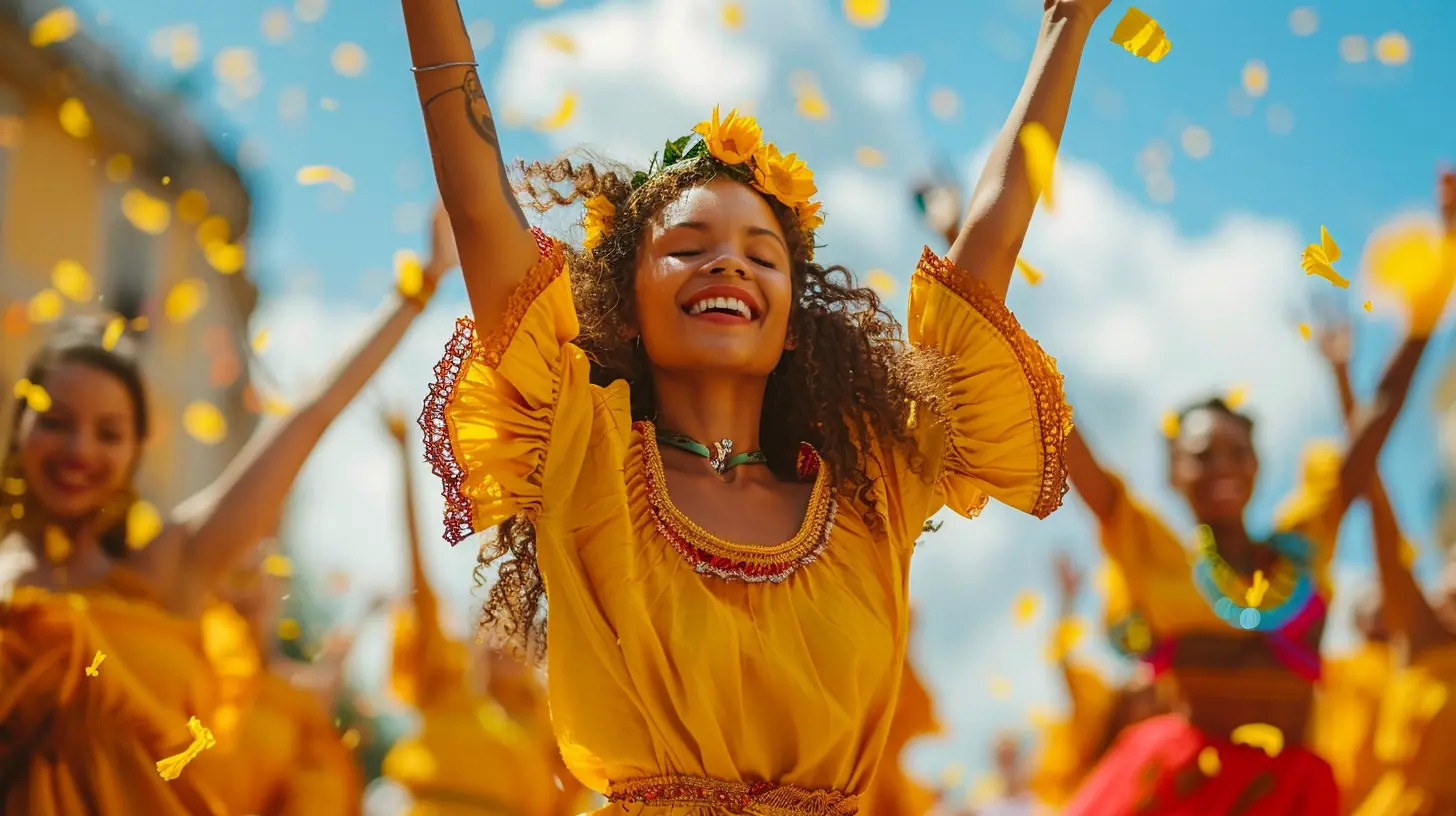
Venice Carnival runs for roughly two weeks in the period leading up to Shrove Tuesday, which in 2027 falls in early February. It is one of the oldest and most photographed festivals in Europe, and it is also one of the most misunderstood.The Carnival that most visitors imagine, with elaborate costumes and masked balls, exists, but it is largely a paid, ticketed affair. The public events are more modest: processions, performances, and crowds in the piazza. The real experience depends on what you are willing to pay for and how much you are willing to plan.
Venice itself is the deeper issue. Overtourism has pushed residents out and made the city feel, at times, like a stage set. Traveling during Carnival intensifies this. If you go, consider staying in a quieter sestiere, eating away from San Marco, and treating the event as one part of a longer visit rather than the whole point.
Oktoberfest, Munich
Oktoberfest in 2027 will run from mid-September into the first weekend of October, following its traditional schedule. It is the largest folk festival in the world, with more than six million visitors in a typical year.The event is often dismissed by serious travelers as a tourist trap. That judgment is partly fair and partly lazy. The festival is genuinely commercial, but it is also a living tradition with deep roots in Bavarian culture. The difference between a mediocre experience and a great one comes down to which tents you choose, when you go, and how you behave.
Practical notes:
- The first weekend and the last weekend are the most crowded. Midweek days are calmer and easier to navigate.
- Reservations are essential for the major tents, especially in the evenings. Without one, you may wait hours or not get in at all.
- The festival is not just about beer. The food, music, and traditional dress are central to the experience.
- Respect the local etiquette. Standing on tables, chanting, and excessive drinking are tolerated to a point but can get you removed.
The Americas: Ritual, Rhythm, and Remembrance
Day of the Dead, Mexico
Dia de los Muertos, celebrated on November 1 and 2, is one of the most visually striking and emotionally rich cultural events in the world. It is also one of the most frequently misrepresented.The holiday is not a Mexican version of Halloween. It is a family-centered observance in which the living welcome back the spirits of the dead. Altars, known as ofrendas, are built in homes and public spaces. Cemeteries fill with families who spend the night among the graves.
The best places to experience it are not the ones most heavily marketed. Mexico City has expanded its public celebrations in recent years, with a large parade and installations in the center. Oaxaca is more traditional, with elaborate altars, comparsas, and a strong local culture around the holiday. Smaller towns in Michoacan, particularly around Lake Patzcuaro, offer some of the most authentic observances, though access is limited and accommodation is scarce.
What travelers get wrong:
- Treating the holiday as a photo opportunity. Cemeteries are not attractions. If you visit, do so quietly and only where visitors are welcome.
- Assuming all celebrations are the same. Regional differences are significant. What is appropriate in Mexico City may be out of place in a small village.
- Booking late. Accommodation in Oaxaca and Patzcuaro sells out months in advance for the holiday.
Carnival in Rio de Janeiro
Rio Carnival is the most famous carnival in the world, and for good reason. The samba schools that compete in the Sambadrome spend the entire year preparing, and the result is a level of production that rivals any major sporting event or concert.The event runs for about a week in February or early March, with 2027 dates falling in mid-February. The Sambadrome parades are ticketed and expensive, but they are also the centerpiece. The street parties, known as blocos, are free, chaotic, and often more fun.
The trade-off is between access and authenticity. Sambadrome tickets give you a seat at the biggest show. Blocos give you a chance to participate rather than watch. Most travelers do both, and that is a reasonable approach.
Safety requires attention. Rio is a city of extreme inequality, and Carnival brings both opportunity and risk. Stick to well-populated areas, avoid displaying valuables, and use registered transport at night.
Africa and the Middle East: Ancient Rhythms, Modern Stages
Timkat, Ethiopia
Timkat is the Ethiopian Orthodox celebration of Epiphany, held on January 19 or 20 depending on the calendar. It commemorates the baptism of Jesus in the Jordan River, and it is celebrated with processions, overnight vigils, and ceremonial bathing.Gondar is the most famous location, where the event includes a recreation of the Ark of the Covenant being carried to a pool. The ceremony is deeply religious and draws pilgrims from across the country.
Ethiopia is not an easy destination for first-time travelers. Infrastructure is limited, and the country has experienced periods of instability. Travelers considering Timkat should check current advisories, work with experienced local operators, and build in flexibility.
What the event offers is something increasingly rare: a major religious festival that has not been reshaped for tourism. Visitors are welcome, but they are observers, not the audience.
World Expo 2025, Osaka, Japan (Extended Into 2027)
The World Expo in Osaka opened in 2025 and was originally scheduled to close in October of that year. As with many recent expos, discussions about extensions and legacy programming have continued, and some pavilions and cultural programs are expected to remain accessible into 2027.For travelers, the opportunity is to combine a global exhibition with Japan's own cultural calendar. If you are planning a trip to Japan in 2027, check the current status of the Expo site before building an itinerary around it. If it is open, it is worth a day or two. If not, Japan offers no shortage of alternatives, from the Gion Matsuri in Kyoto to the Nebuta Matsuri in Aomori.
How to Choose the Right Event for You
Not every iconic event suits every traveler. The most common mistake is choosing based on prestige rather than fit.Ask yourself these questions:
- How much discomfort am I willing to accept? Events like the Kumbh Mela and Timkat demand physical and emotional resilience. Carnival and Oktoberfest are easier but still intense.
- Do I want to participate or observe? Some events welcome participation. Others, especially religious ones, do not.
- What is my tolerance for crowds and unpredictability? If the answer is low, consider smaller regional versions of the same event.
- Am I willing to plan a year or more ahead? For 2027's headline events, the answer needs to be yes.
Planning Practicalities That Actually Matter
Accommodation
For major events, book as early as possible and choose refundable rates when available. In cities like Prayagraj, Oaxaca, and Cadiz during eclipse week, the best options disappear first and prices only go up.Health and Safety
Check vaccination requirements well in advance. Travel insurance should cover medical evacuation, not just basic medical care. For events in remote areas, confirm that your policy covers the specific region.Cultural Respect
Read about the event's meaning before you go. Understand what is sacred, what is public, and what is off-limits. Dress appropriately. Ask before photographing people. Follow local guidance even when it seems inconvenient.Timing
Arrive early. Leave late. The days before and after a major event are often more enjoyable than the peak itself, and they give you a buffer against delays.
Final Thoughts
The events that define 2027 are not interchangeable. Each one asks something different from the traveler who attends it. The Kumbh Mela asks for patience. The eclipse asks for planning. Carnival asks for energy. Timkat asks for humility.What they share is a quality that is increasingly hard to find: they are gatherings that exist for reasons older and deeper than tourism. Showing up for them, with preparation and respect, is a way of participating in something larger than a trip.
Choose one. Plan carefully. Go with an open mind and a willingness to be changed by what you find.
all images in this post were generated using AI tools
Category:
Cultural CelebrationsAuthor:

Shane Monroe