How Food Shapes Cultural Celebrations Across Continents in 2026
29 September 2026
Food is never just fuel at a celebration. It is the script, the stage, and the cast all at once. Think about a wedding without cake, a birthday without a candle-topped dessert, or a harvest festival without the first taste of the new crop. Something feels missing, even if the party continues. That gap tells us something important: at celebrations, food carries meaning that music and speeches cannot.
As we move through 2026, this relationship between food and festivity is shifting in interesting ways. Migration patterns keep reshaping menus. Climate pressures are forcing substitutions. Social media accelerates the spread of dishes across borders while also flattening them into trends. And a generation of cooks raised on global cuisine is remixing traditions with confidence rather than caution.
This article looks at how food shapes celebrations on every inhabited continent, what is changing this year, and what travelers and hosts should understand before they plan their next big meal or book that festival trip.
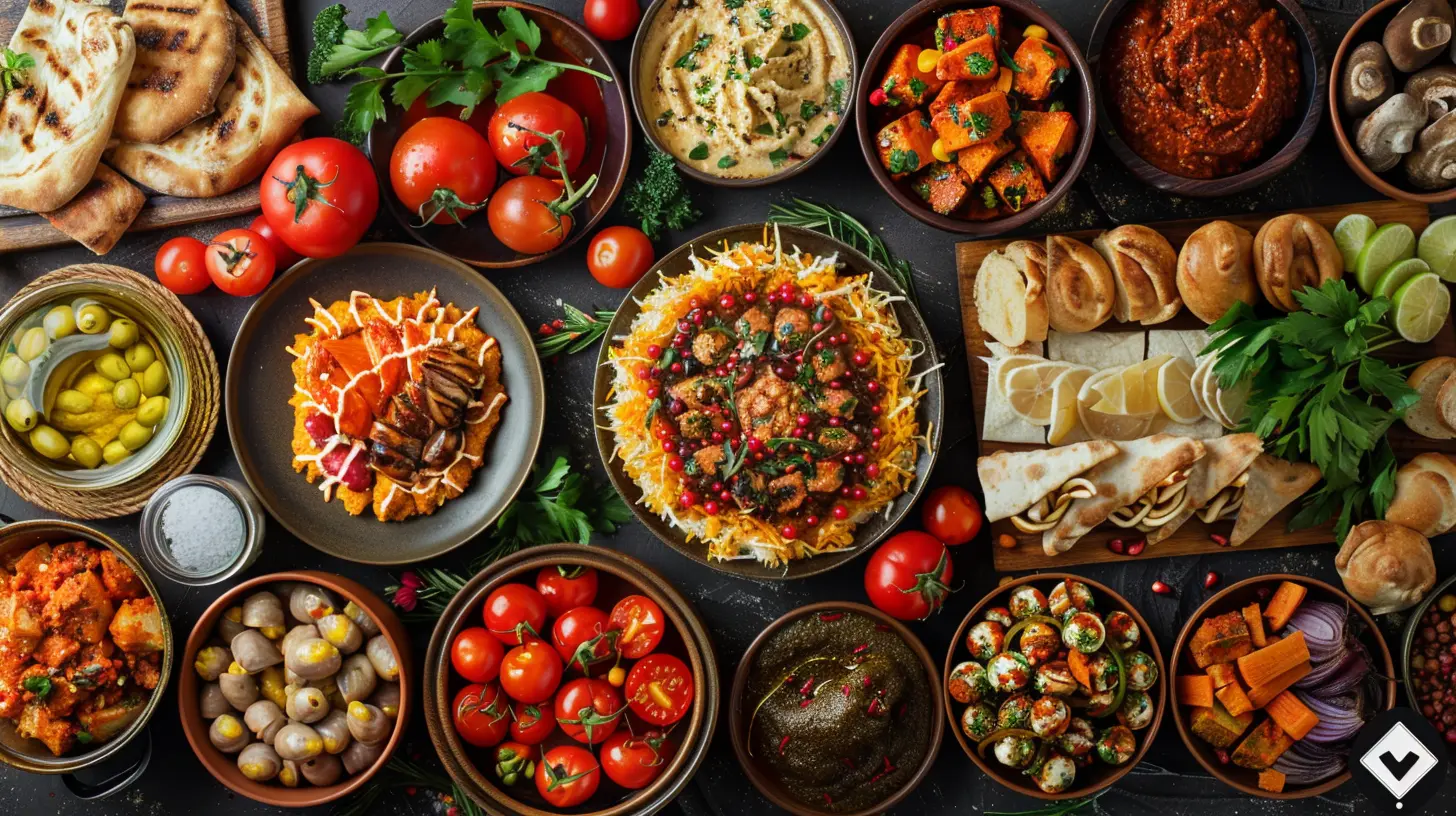
Why Food Anchors Celebration in the First Place
Before comparing continents, it helps to understand why food holds this power. Three forces do most of the work.Memory and repetition. A dish served every year at the same time becomes a kind of calendar. The smell of it triggers memories of past celebrations, which is why diaspora communities fight hard to preserve recipes even when other traditions fade. The food becomes the tradition.
Participation. Cooking together distributes labor but also distributes belonging. Kneading dough, stuffing leaves, or grilling skewers gives people a role. A guest who helps make the food is no longer a spectator.
Scarcity and abundance. Many celebration foods historically marked moments when expensive ingredients became available: meat after a fast, sugar after harvest, butter when cows calved. That logic still shapes menus, even when the scarcity has disappeared.
Understanding these three forces explains why some celebrations resist change and others adapt quickly. Dishes tied to memory change slowly. Dishes tied to participation can absorb new ingredients. Dishes tied to scarcity often lose their meaning first when the ingredient becomes everyday.
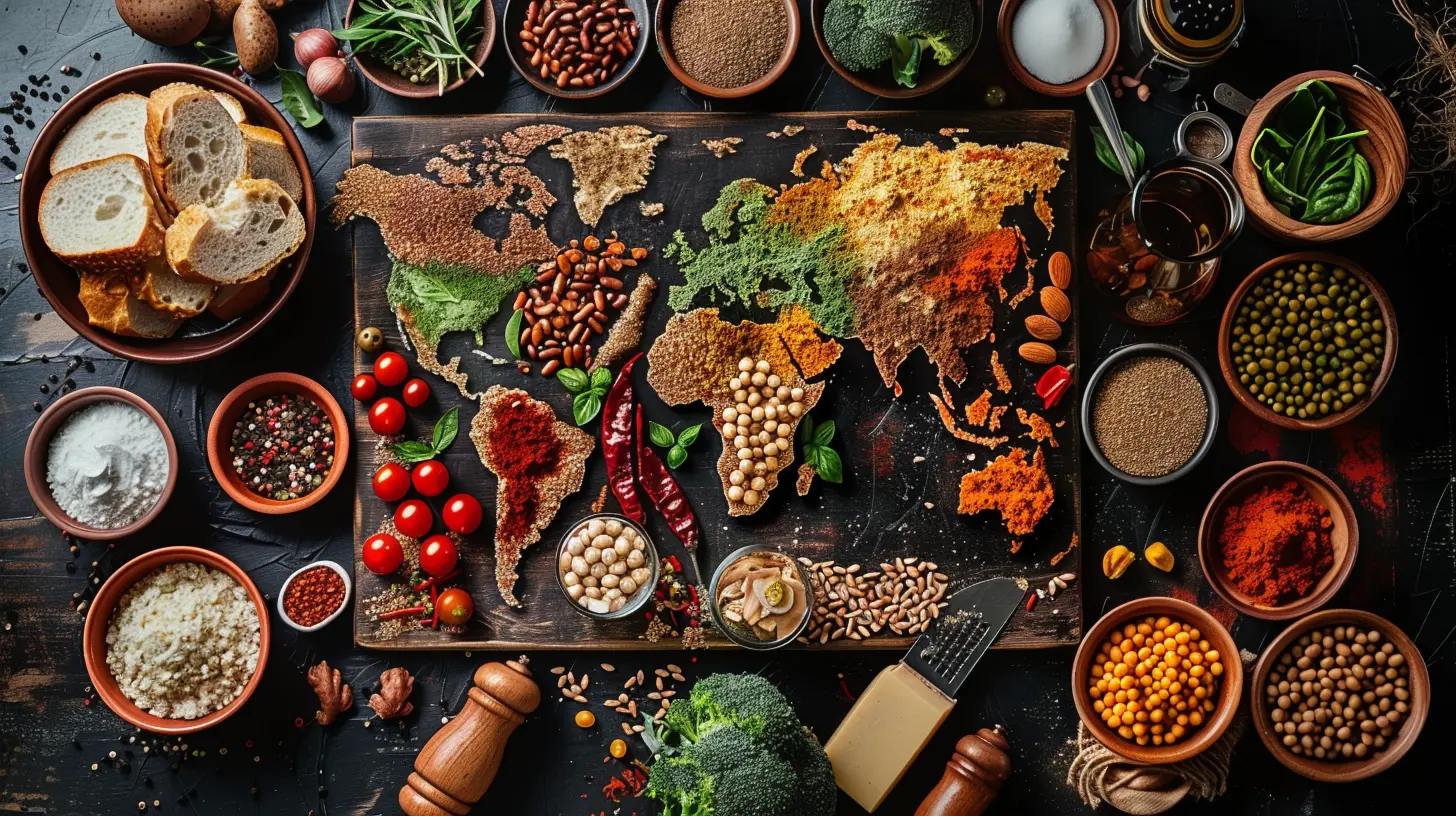
Asia: Food as Ritual Precision
Nowhere is the link between food and celebration more codified than in Asia. Lunar New Year across Chinese communities offers the clearest example. Dumplings shaped like ingots, whole fish symbolizing surplus, glutinous rice cakes representing advancement. Each dish carries a verbal pun or a symbolic wish, and serving the wrong item can genuinely upset a host.What makes this system work is that the symbolism is teachable. A child learns why the fish is served whole and why it should not be flipped. The explanation travels with the dish. That is a remarkably efficient way to transmit culture across generations.
In 2026, several pressures are testing this system.
- Urban families increasingly order prepared New Year dishes rather than cooking from scratch. Convenience rises, but the participation element weakens.
- Younger cooks substitute ingredients for dietary or ethical reasons, sometimes keeping the shape but changing the filling.
- Regional variations are becoming more visible as internal migration mixes families from different provinces around one table.
The trade-off is real. A family that buys a prepared feast saves days of labor, especially when both parents work. But it also loses the kitchen conversation where stories get passed down. A practical middle path many households now use: buy the labor-intensive items and cook one or two symbolic dishes together. You keep the ritual anchor without the exhaustion.
India: Fasting as Celebration
India complicates the Western assumption that celebration equals indulgence. Many festivals involve restriction as much as abundance. Navratri brings specific fasting foods. Ekadashi cycles shape weekly menus for millions. The celebratory element comes from the discipline and the shared experience, not from richness.This matters for travelers. If you assume every Indian festival is a feast, you will misread the table and possibly offend your host. The better approach is to ask what the meal means before assuming it should be heavy.
Japan: Seasonality as the Message
Japanese celebration food leans hard into season and presentation. New Year's osechi boxes are designed to keep for days, which is a practical inheritance from a time before refrigeration. The visual arrangement communicates wishes. Cherry blossom season brings pink-themed sweets that exist mostly to mark the calendar.The lesson here is that celebration food does not need to be expensive. It needs to be timely. A seasonal sweet that appears for two weeks carries more weight than an elaborate dish available year-round.
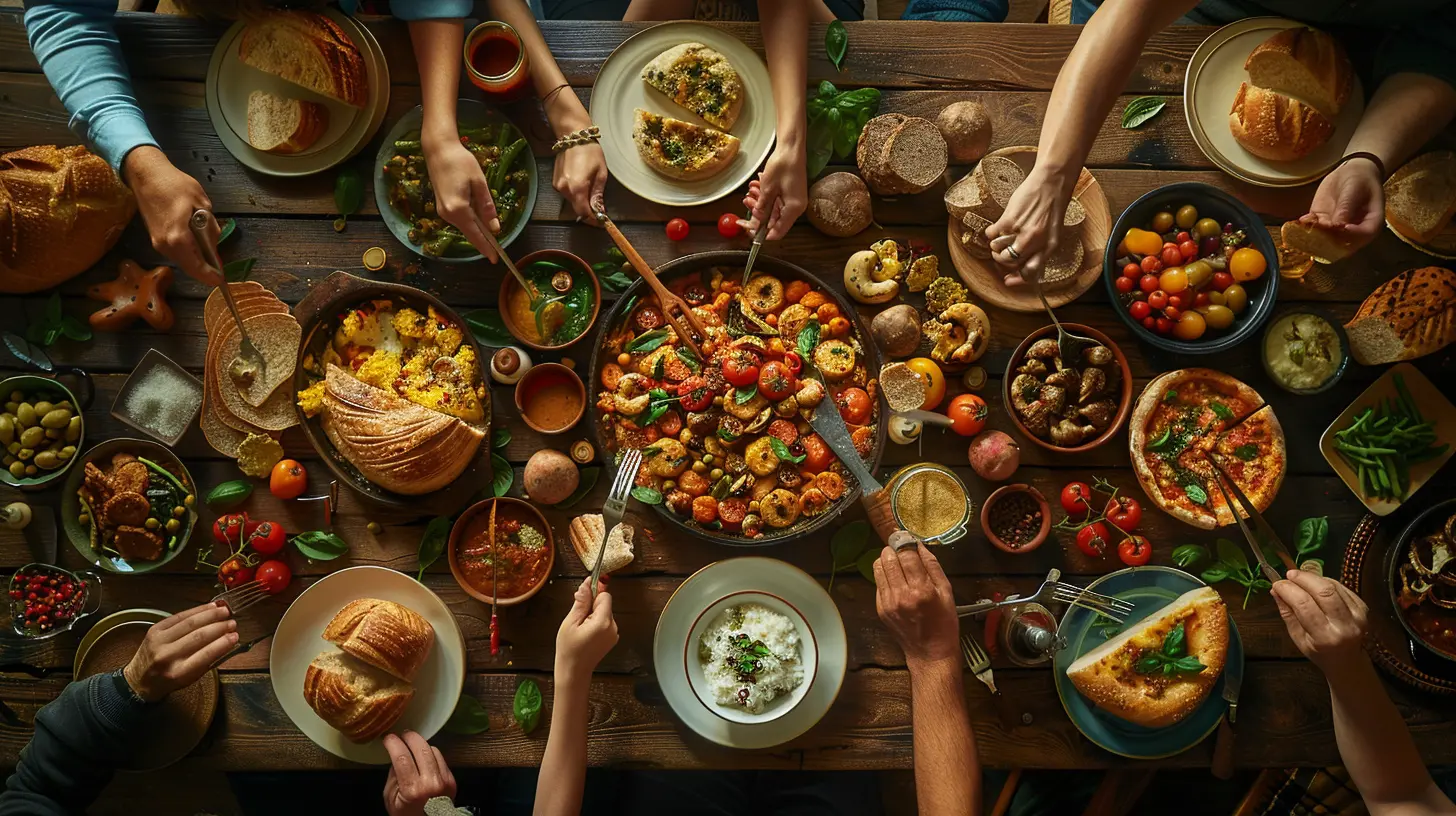
Europe: Regional Identity on a Plate
Europe's celebration foods map almost perfectly onto regional identity. Christmas in Italy, Poland, or Portugal looks completely different despite sharing a religion and a calendar. The food is the differentiator.Consider a few examples and what they reveal.
- Poland: Wigilia, the Christmas Eve dinner, traditionally includes twelve meatless dishes. The number echoes the apostles, and the absence of meat marks the fast before the feast. The structure is the point.
- Italy: The Feast of the Seven Fishes varies wildly by family, and arguments about the correct number of dishes are practically a tradition themselves. This shows how celebration food can be simultaneously rigid and flexible.
- Spain: Twelve grapes at midnight on New Year's Eve. Simple, cheap, and timed to the clock. It works because everyone can participate regardless of income.
The European pattern suggests something useful for anyone planning a celebration: the strongest traditions are often the simplest. Twelve grapes beat a lavish banquet because everyone can join.
In 2026, European celebration food faces a specific tension between heritage protection and accessibility. Several countries have pushed to protect regional food names and methods, which preserves quality but can also freeze traditions in place. Meanwhile, younger cooks want to adapt dishes for vegan, halal, or gluten-free guests. The most successful hosts I have spoken with treat the core dish as untouchable and the sides as negotiable. That split keeps tradition intact while including everyone.
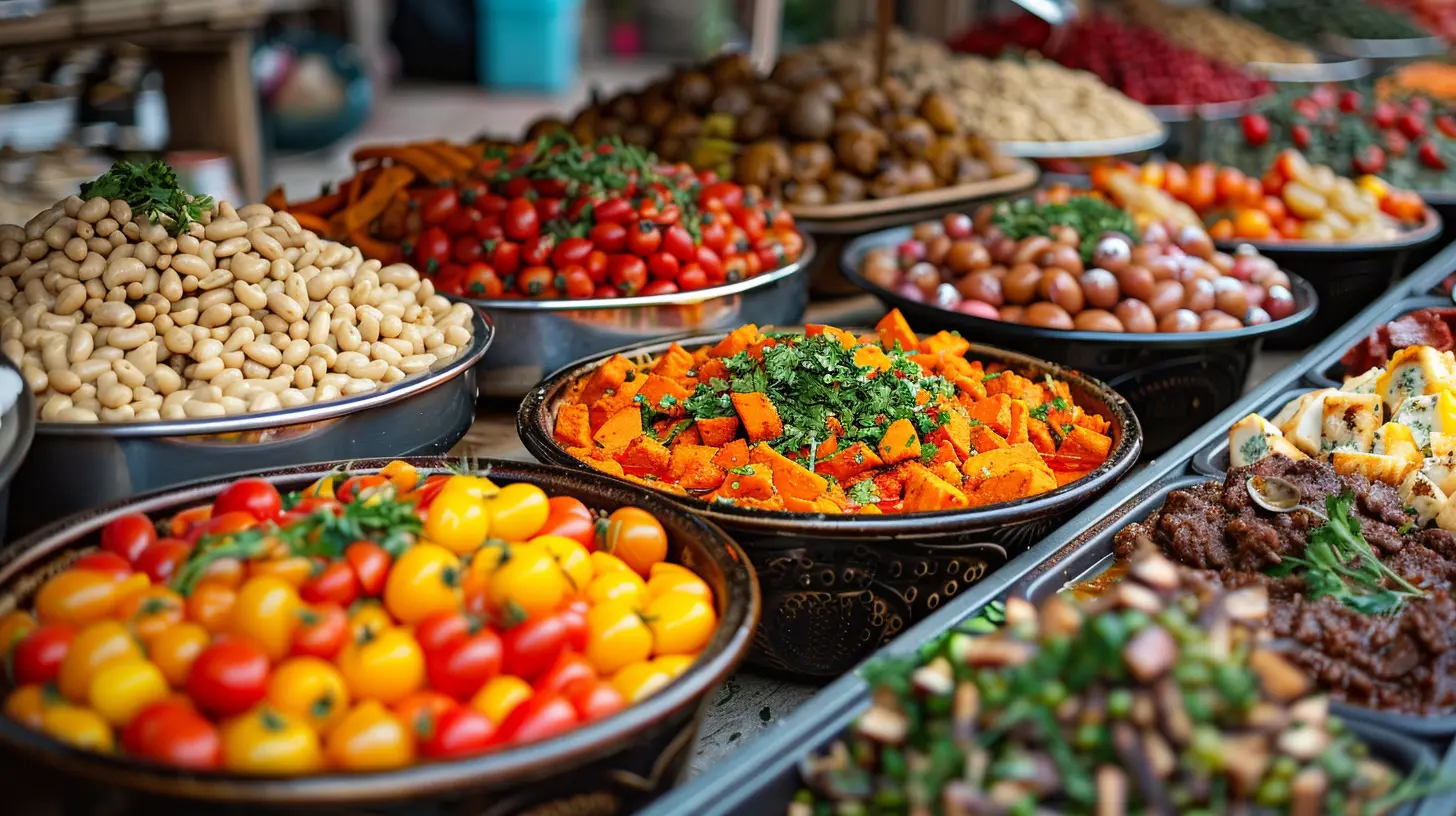
Africa: Communal Cooking and the Logic of Sharing
African celebration food varies enormously across the continent, but a common thread runs through many cultures: the meal is sized for the group, not the individual. Large shared platters, communal bowls, and cooking vessels built for dozens of people shape the entire experience.In Ethiopia, injera serves as both food and utensil. At celebrations, the flatbread covers the platter and the stews are spooned on top. Everyone eats from the same surface. This is not just practical. It enforces closeness and equality. You cannot easily eat separately from your neighbor.
In West Africa, celebrations often center on rice dishes, soups, and grilled meats prepared in quantity. Jollof rice has become a friendly rivalry between Nigeria, Ghana, and Senegal, and that rivalry itself has become part of the celebration. The competition is the point.
What should outsiders understand before joining?
1. The host may insist you eat more than you want. Refusing entirely can read as rejection. Taking a small portion and complimenting the cook is the safer path.
2. Eating with the right hand is common in many communities. Watch what others do before you reach in.
3. Bringing a dish is not always expected. In some cultures it is welcome, in others it implies the host cannot provide. Ask first.
The communal model has real advantages. It reduces per-person cost, spreads labor, and makes inclusion automatic. Its disadvantage is that it struggles with dietary restrictions. A vegan guest at a shared platter has limited options. Many urban hosts in 2026 solve this by adding a separate small dish for the guest with restrictions, which preserves the communal centerpiece while respecting individual needs.
North America: Reinvention as Tradition
North America's celebration food is defined by mixing. Thanksgiving in the United States carries a standard menu, but the standard menu is itself a fusion of Indigenous, European, and later immigrant contributions. In Canada, Thanksgiving lands in October and the menu shifts accordingly. Mexico's Day of the Dead brings pan de muerto, sugar skulls, and family altars where the food is offered to the dead before the living eat.The defining feature here is speed of reinvention. A dish can go from regional curiosity to national tradition in a single generation. This is both a strength and a weakness. Strength because it absorbs new communities quickly. Weakness because the original meaning can get lost when the dish is detached from its context.
A clear example is the spread of Dia de los Muertos imagery into mainstream Halloween marketing. The food often gets separated from the altar and the remembrance it belongs to. If you are hosting or attending such a celebration, the respectful move is to understand what the food is for before treating it as decoration.
For hosts in 2026, the practical challenge is dietary diversity. A single table may need to accommodate vegetarians, vegans, gluten-free guests, and people avoiding pork or alcohol for religious reasons. The best approach is not to make every dish universal. That produces bland food. Instead, build a menu where each guest has at least two substantial options, and label everything clearly. Guests appreciate clarity more than they appreciate a single compromised dish.
South America: Celebration as Collective Effort
South American celebrations often involve slow, collective cooking. Brazilian feijoada, Argentine asado, Peruvian pachamanca. These are not quick dishes. They require hours, sometimes a full day, and they require people.The asado is instructive. The person tending the grill holds a specific role, and that role carries status. The cook is not just making food. The cook is hosting. This differs from cultures where the host stays in the kitchen and the guests never see the work. In an asado, the process is public and the waiting is part of the event.
This model has a clear benefit: it prevents the host from being isolated. It also has a cost: it demands time that many modern families do not have. In 2026, some families split the difference by starting the grill early and treating the long cook as the social event itself rather than a delay before eating.
Carnival adds another layer. In Brazil, celebration food during Carnival is designed for mobility and heat. Street snacks, fried items, and quick bites dominate because nobody is sitting down. The food matches the physical reality of the event. That is a design principle worth stealing for any large gathering: match the food to how people will actually move.
Oceania: Adaptation and Indigenous Revival
Oceania offers two contrasting stories. Australia and New Zealand have celebration foods shaped heavily by British inheritance, then reshaped by Asian and Mediterranean migration. The Christmas barbecue in December heat is a good example of a tradition adapting to climate rather than the other way around.Alongside this, Indigenous food traditions are experiencing a serious revival. Bush tucker ingredients, traditional cooking methods, and Maori hangi earth ovens are being reintroduced into public celebrations with care about who gets to cook and profit from them. This raises a genuine question for event organizers: how do you include Indigenous food respectfully rather than extractively? The common answer is to involve Indigenous cooks as leaders and decision-makers, not as consultants brought in for authenticity.
For travelers, the practical advice is straightforward. If you attend a hangi or similar earth-oven feast, understand that the cooking method is the ceremony. The digging, the heating of stones, the covering, the waiting. Do not treat it as a novelty photo opportunity. Ask before you photograph.
What Is Actually Changing in 2026
Several shifts are visible across multiple continents this year.Climate-driven substitution. Ingredients that were once reliable are becoming expensive or unavailable in certain seasons. Olive oil, cocoa, and certain grains have all faced pressure. Celebration menus are adapting, sometimes reluctantly. The interesting part is that substitutions often get absorbed into tradition within a generation. What feels like a compromise today may be the standard recipe in 2046.
Diaspora-driven fusion. Communities that move bring their celebration food with them, and the second generation mixes it with local ingredients. This produces genuinely new traditions rather than diluted ones. Korean-Mexican, Nigerian-Italian, and Vietnamese-Cajun celebration tables are all real and growing.
Digital documentation. Recipes that once lived only in family memory are being recorded on video and shared publicly. This preserves them but also standardizes them. The risk is that regional variation gets flattened into a single "authentic" version. Hosts should feel free to keep their family's version even if it differs from what a video calls correct.
Dietary inclusion as default. Ten years ago, a host might have asked about allergies. Now, many hosts plan for vegetarian, vegan, and gluten-free options without being asked. This is a genuine improvement in hospitality, though it can create menu bloat if handled poorly.
Common Mistakes Hosts and Travelers Make
Even well-meaning people get this wrong. Here are the patterns I see most often.- Treating a celebration dish as a generic recipe. If you cook a dish that belongs to a specific holiday without understanding its role, you may serve it at the wrong time or in the wrong way. Context is part of the recipe.
- Assuming spice level equals authenticity. Many celebration dishes are mild. Heat is regional, not universal.
- Replacing core ingredients without saying so. Substitutions can be fine, but guests with cultural ties to the dish may feel dismissed if you do not acknowledge the change.
- Overloading the menu. More dishes does not mean more celebration. It often means more stress and more waste.
- Photographing before eating. In many cultures, the meal starts when the host invites it. Waiting for that cue is basic respect.
Practical Advice for Planning a Celebration Menu
Here is a framework that works across cultures.Start with one anchor dish. Every successful celebration menu has a centerpiece that carries the meaning. Choose it first and protect it.
Build participation around the anchor. Choose one or two dishes that guests can help prepare. This converts waiting time into social time.
Plan for restrictions without compromising the anchor. Keep the centerpiece traditional. Add flexible sides. This satisfies both tradition and inclusion.
Match food to movement. If people will stand, serve handheld items. If they will sit for hours, slower dishes work.
Cook less than you think. Running out of one dish is far better than throwing away half the table.
Final Thoughts
Food shapes cultural celebrations because it does three jobs at once: it remembers, it includes, and it marks time. Across every continent, the specific dishes differ, but the underlying mechanics repeat. When a tradition feels threatened, it is usually because one of those three jobs has stopped working.In 2026, the biggest opportunity is not inventing new celebration foods. It is understanding why the existing ones work, then adapting them carefully so they can survive the next generation without losing their meaning. That is a harder task than it sounds, and it is worth doing well.
all images in this post were generated using AI tools
Category:
Cultural CelebrationsAuthor:

Shane Monroe