The Hidden Symbolism Behind Popular Cultural Events in 2026
10 September 2026
Every year, millions of travelers book flights, queue for hours, and pack into crowded squares to witness cultural events they barely understand. They see the costumes, hear the music, and snap photos, but the deeper language of these gatherings often goes unnoticed. As we move into 2026, a year packed with major global festivals, commemorations, and sporting spectacles, the gap between spectacle and meaning has never been wider. This is not a criticism of the casual observer. It is an invitation to look closer.
Cultural events are not just entertainment. They are coded messages from the past, negotiations about the present, and blueprints for the future. When you understand the symbolism, you stop being a tourist and start being a participant. You see why the bonfire is lit, why the mask is red, why the parade route bends the way it does. In 2026, with events ranging from the FIFA World Cup in North America to the 250th anniversary of the United States Declaration of Independence, the symbolism is thicker and more contested than ever. Let's break down what those symbols actually mean, why they matter, and how you can read them without falling for the shallow interpretations that dominate social media.
The Problem with Surface-Level Interpretation
The most common mistake travelers make is treating symbolism like a simple dictionary. A dove means peace. A flame means passion. A circle means unity. This approach fails because symbols are not static. They shift with context, power dynamics, and history. A swastika meant something entirely different in 1920 than it did in 1940. The same is true for subtler symbols at cultural events. The color green at the St. Patrick's Day parade in New York does not carry the same weight as green at a political rally in Tehran. Context is everything.The second mistake is assuming that organizers control the meaning. They do not. Symbols are co-created by the crowd, the media, and the opposition. In 2026, you will see this clearly at the FIFA World Cup. The official mascot, the branding, and the opening ceremony are carefully crafted by corporate sponsors. But the fans in the stands will create their own symbols, often in direct opposition to the official narrative. The vuvuzela in 2010, the rainbow flags at Qatar 2022, and the political chants at every tournament prove that the crowd always writes its own subtext.
To truly understand a cultural event in 2026, you must ask three questions. First, what is the historical origin of this symbol? Second, who is using it now and for what purpose? Third, what does the crowd believe it means, regardless of what the organizers say? The gap between those three answers is where the real story lives.
The 2026 World Cup: More Than a Game
The FIFA World Cup in 2026 is a perfect case study because it spans three countries: the United States, Canada, and Mexico. This is the first time three nations have hosted the tournament, and the symbolism of that arrangement is enormous. On the surface, it represents unity and shared passion for football. But look deeper and you see a complex negotiation about power, migration, and economic inequality.The official logo for 2026 is a stylized soccer ball with the number 26 embedded in a pattern that evokes the three host nations. The designers claimed it represents unity in diversity. That is a nice phrase, but the real symbolism is found in the match locations. The final will be held at MetLife Stadium in New Jersey, just outside New York City. That choice is not accidental. New York is the global capital of media and finance. Placing the final there sends a message that this World Cup is not about the grassroots love of football. It is about global commerce and soft power.
Contrast that with the opening match in Mexico City's Estadio Azteca. That stadium sits at 2,200 meters above sea level, and it has hosted two World Cup finals already. For Mexican fans, the stadium is a shrine to their footballing history. The symbolism there is about endurance and pride, not corporate hospitality. If you attend a match in Mexico City, you will feel a different energy than in New York. The chants, the drumming, and the flares are not just noise. They are a declaration that the sport belongs to the people, not just the sponsors.
The biggest symbolic tension in 2026 will be the treatment of migrant workers and the broader immigration debate. The United States has been deeply divided over border policy for years. Hosting a tournament that brings millions of visitors from Latin America, Europe, and Africa into direct contact with American immigration enforcement creates an unavoidable contradiction. Some activists will use the World Cup as a platform to highlight the plight of undocumented workers. Others will see the tournament as a chance to showcase a welcoming America. Both sides will deploy symbols: flags, banners, and even the choice of which anthem to sing. Watch for this. It will be the hidden story of the tournament.
The US Semiquincentennial: A Birthday with Baggage
On July 4, 2026, the United States will mark 250 years since the Declaration of Independence. This is a massive cultural event, and it is riddled with symbolic landmines. The official celebrations will emphasize themes of freedom, democracy, and progress. But 2026 is not 1976. The country is more polarized, and the historical narrative is being actively contested in schools, museums, and statehouses.The symbolism of the Declaration itself is a masterclass in layered meaning. The document's most famous line, that all men are created equal, was written by a slaveholder. That contradiction has never been resolved. In 2026, you will see two competing uses of this symbol. Conservative groups will cite the Declaration as the foundation of American exceptionalism and individual liberty. Progressive groups will use the same text to argue that the country has never lived up to its own ideals and that the anniversary should be a moment of reckoning, not celebration.
If you are planning to attend events in Philadelphia, Boston, or Washington DC, do not expect a unified experience. The official fireworks and reenactments will be polished and patriotic. But on the edges, you will find counter-events, teach-ins, and art installations that challenge the mainstream narrative. This is not a bug in the system. It is the system working as designed. The United States was founded on argument, and its biggest birthday will be no different.
One specific symbol to watch in 2026 is the Liberty Bell. The bell is cracked, and it has not been rung since the 19th century. Organizers will use it as a visual centerpiece, but the crack itself is the most honest symbol of the nation. It is broken, imperfect, but still resonant. Do not let the polished tours erase that reality. When you see the bell, ask yourself what the crack represents in the context of 2026. The answer might surprise you.
The Return of the Olympics in a Fractured World
The 2026 Winter Olympics will take place in Milan and Cortina d'Ampezzo, Italy. The Summer Games are still two years away, but the winter edition carries its own heavy symbolism. Italy is the first Western European country to host the Olympics since the pandemic, and the organizers have framed the event as a return to normalcy. That framing is itself a symbol. It suggests that the world has moved past the isolation and fear of 2020 to 2022.But the deeper symbolism of the Milan-Cortina Games is about climate change. Winter sports are uniquely vulnerable to rising temperatures. Several former Olympic host cities, including Squaw Valley in California and Chamonix in France, are no longer reliable for winter sports. Milan-Cortina is already facing challenges with snow scarcity. The organizers will rely heavily on artificial snow, which is energy-intensive and not carbon-neutral. This creates a profound contradiction. The Games celebrate athletic excellence in snowy landscapes while simultaneously contributing to the conditions that make those landscapes disappear.
If you attend the Games, pay attention to the venues themselves. The ice skating rinks and ski slopes are symbols of human mastery over nature. But in 2026, they are also monuments to our denial. The International Olympic Committee will talk about sustainability, but the actual infrastructure tells a different story. This is not to say you should not go. The human drama of the Games is compelling, and the Italian hospitality will be world-class. Just do not mistake the greenwashing for the real thing.
The Edinburgh Fringe and the Art of Subversion
Not all cultural events in 2026 are massive state-sponsored affairs. Some of the most symbolically rich events are smaller, more chaotic, and more honest. The Edinburgh Festival Fringe in August is a prime example. It is the largest arts festival in the world, and it has no curator, no central theme, and no official gatekeeper. Anyone can perform. That openness is its core symbol.The Fringe began in 1947 as an unofficial addition to the Edinburgh International Festival, which was created to heal the wounds of World War II through high culture. The Fringe was the rebellious sibling from day one. It rejected the idea that art needed to be approved by committees. In 2026, the Fringe will be more relevant than ever because the tension between official culture and subversive culture is at a boiling point.
You will see this in the street performances, the small theater pieces, and the comedy shows that push against political correctness, corporate sponsorship, and algorithmic content curation. The symbol of the Fringe is the unvetted performer holding a flyer on a rainy street corner. That image stands in direct opposition to the polished, branded, and monetized events of the World Cup or the Olympics. The Fringe asks a simple question: what happens when you remove the filter? Sometimes the answer is chaos. Sometimes it is brilliance. Usually it is both.
For the traveler, the Fringe offers a lesson in how to read symbolism in real time. Because there is no official narrative, you must rely on your own judgment. Why is that performer wearing a clown nose? Why is that play using silence instead of music? The answers are not provided. You have to construct them yourself. That is exhausting, but it is also liberating. The Fringe is the antidote to the overly produced cultural events that dominate the calendar.
Día de los Muertos and the Commercialization of the Sacred
In early November 2026, Mexico will celebrate Día de los Muertos, the Day of the Dead. This event has exploded in global popularity, thanks in large part to films like Coco and the spread of Halloween-adjacent marketing. But the commercialization of this holiday is a double-edged sword. On one hand, it brings attention to a beautiful tradition. On the other, it strips away the profound symbolism of death and remembrance.The core symbols of Día de los Muertos are the ofrenda, the marigold, the sugar skull, and the papel picado. Each has a specific meaning. The marigold's strong scent is believed to guide spirits back to the world of the living. The sugar skull represents the departed soul, not as a morbid object but as a sweet reminder of mortality. The ofrenda is a portal, a space where the living and the dead can coexist for one night.
In 2026, you will see these symbols everywhere, from high-end hotel lobbies in Cancun to mass-produced costumes in American party stores. The question is whether the meaning survives the transfer. Many Mexican artists and cultural critics argue that the global version of Día de los Muertos is a sanitized, Disneyfied distortion. They point out that the real holiday is not a carnival. It is a deeply personal act of memory. The public celebrations are real, but the private ofrendas in homes are where the true symbolism lives.
If you want to experience the authentic event, do not just book a tour that takes you to a staged performance in Oaxaca or Mexico City. Ask to visit a local family's home. Bring marigolds and bread. Sit in silence. That is where you will understand what the symbols actually mean. The commercial version is not worthless, but it is a pale imitation. Treat it as an introduction, not the full story.
The Hajj and the Limits of Symbolic Interpretation
No discussion of cultural events in 2026 would be complete without mentioning the Hajj, the annual Islamic pilgrimage to Mecca. It will take place in late April and early May of 2026, depending on the lunar calendar. The Hajj is the largest gathering of people on Earth, with over two million participants. Its symbolism is both ancient and intensely personal.The rituals of the Hajj are dense with meaning. Circling the Kaaba seven times represents the unity of believers in worship of one God. Throwing stones at the pillars of Mina symbolizes the rejection of evil and the casting away of personal demons. Walking between the hills of Safa and Marwa commemorates Hagar's desperate search for water for her son Ishmael. Each act is a physical metaphor for a spiritual state.
For non-Muslims, the Hajj is often misunderstood as a purely outward display of faith. But the deepest symbolism is internal. The white garments worn by all pilgrims, called ihram, strip away all markers of wealth, race, and status. A king and a street sweeper wear the same cloth. This is the most radical egalitarian symbol in the world. It stands in stark contrast to the hyper-commodified status symbols of modern life.
If you are writing about or studying the Hajj, resist the temptation to reduce it to a checklist of rituals. The real symbolism is in the psychological transformation of the pilgrim. The journey is designed to break the ego. That is why it is so powerful and why it resists simple explanation. In 2026, with millions of pilgrims returning to full capacity after years of pandemic restrictions, the collective energy will be immense. Respect that. Do not treat it as a spectacle for your consumption.
Practical Advice for the Symbol-Savvy Traveler in 2026
So how do you put this into practice? First, do your homework before you go. Read the history, but also read the contemporary critiques. Look for voices from inside the culture, not just travel bloggers. Understand that the official narrative is only one version of the story.Second, attend the peripheral events. The main parade is often the least interesting part. The smaller, unsponsored gatherings at the edges are where the raw symbolism lives. At the World Cup, that means the fan zones, not the VIP lounges. At the US Semiquincentennial, that means the local community discussions, not just the fireworks on the National Mall.
Third, ask questions of the locals, but do not demand that they explain their culture to you. Instead, observe. Watch what people do when they think no one is looking. That is where the truth of the symbol is visible.
Fourth, be willing to be uncomfortable. Real symbols often challenge your worldview. If you leave a cultural event feeling only happy and entertained, you probably missed the point. The best events leave you with questions that linger for weeks.
Finally, remember that your presence changes the event. When you attend a cultural event as a tourist, you are not a neutral observer. You are part of the crowd that shapes the meaning. Be aware of your impact. Do not treat sacred spaces as photo studios. Do not turn living traditions into content for your feed. Engage with respect, and the symbols will open themselves to you.
The Future of Symbolism in a Hyperconnected World
As 2026 progresses, we will see a fundamental shift in how cultural symbols are created and consumed. Artificial intelligence, deepfakes, and algorithmic curation are already blurring the line between authentic tradition and manufactured nostalgia. This is both a threat and an opportunity.The threat is that symbols become hollow, designed solely for viral engagement. The opportunity is that we can now trace the genealogy of a symbol across time and space with unprecedented ease. A young person in Jakarta can watch a livestream of the Edinburgh Fringe and immediately compare it to a similar performance in their own city. This cross-pollination can revitalize dead symbols or create entirely new ones.
The key is to remain critical. Do not accept the symbol at face value, but do not dismiss it as fake just because it is new. Symbols are living things. They evolve. The 2026 World Cup logo will mean something different in 2050 than it does today. The Liberty Bell's crack will be read differently by future generations. Your job, as an engaged traveler, is to document what you see and feel now, with honesty and nuance. That documentation becomes part of the symbol's history.
Conclusion: Reading the Unspoken
The cultural events of 2026 are not just dates on a calendar. They are arguments about who we are and who we want to be. The World Cup argues about globalism. The US Semiquincentennial argues about democracy. The Olympics argue about nature. The Fringe argues about art. Día de los Muertos argues about memory. The Hajj argues about faith.When you attend these events, you are not just watching the argument. You are joining it. The symbols you see are invitations to take a side, or at least to understand the sides. Do not waste that opportunity. Look beyond the surface. Ask the hard questions. Sit with the discomfort. And when you come home, you will not have just seen a parade or a match or a ritual. You will have read a living text, one that was written over centuries and is being edited in real time.
That is the hidden value of cultural events. They are not escapes from reality. They are the most concentrated forms of reality we have. In 2026, with the world still healing from pandemics, wars, and political upheaval, these symbols matter more than ever. They are the threads that hold us together, even when we cannot agree on what they mean. Learn to read them, and you will never travel the same way again.
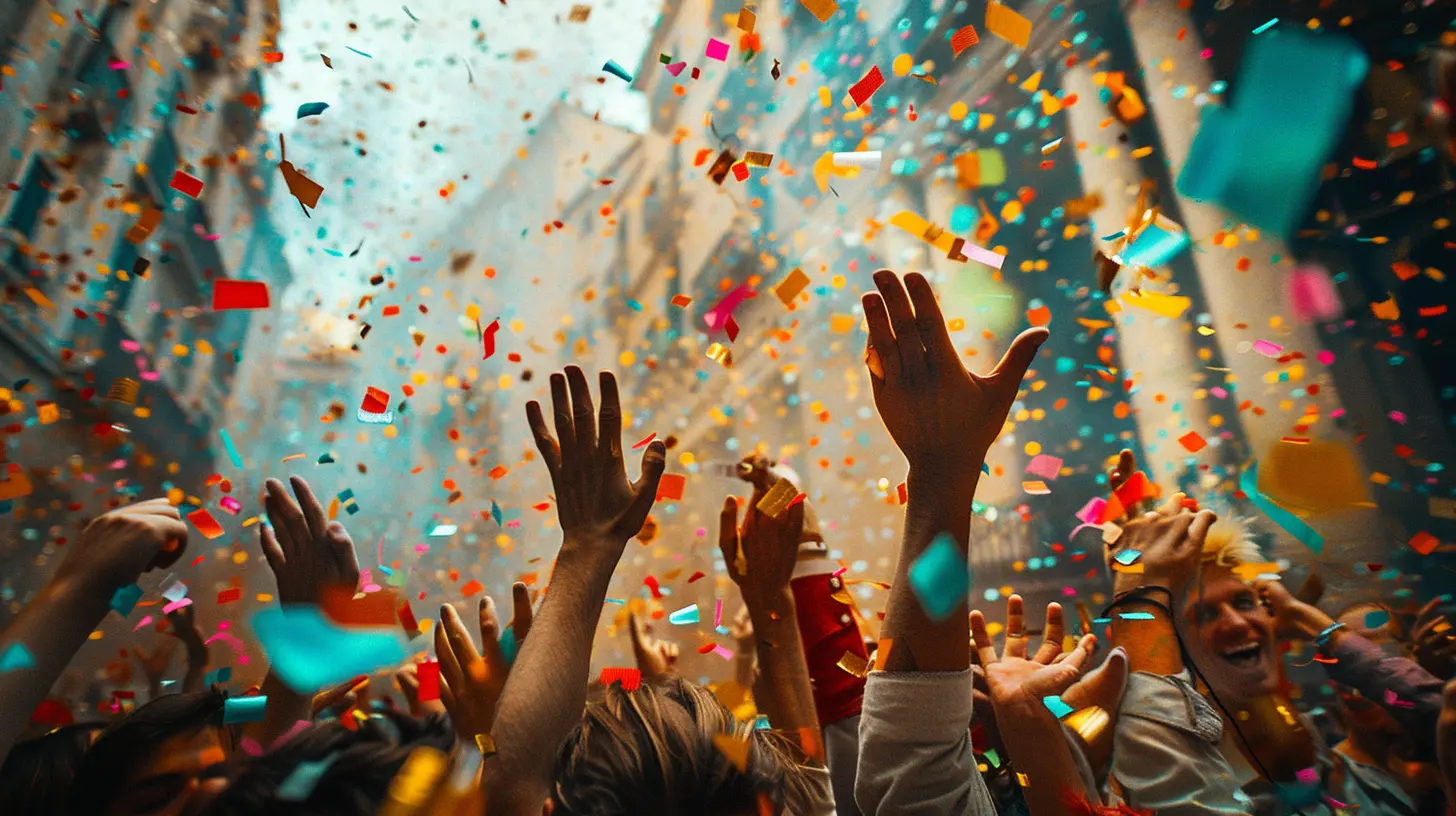
all images in this post were generated using AI tools
Category:
Cultural CelebrationsAuthor:

Shane Monroe
Discussion
rate this article
2 comments
Jemima Hubbard
This article uncovers a fascinating layer of meaning behind cultural events in 2026. Understanding the symbolism enriches our experiences and offers deeper insights into the traditions that define these celebrations. A must-read for any cultural enthusiast or traveler.
September 29, 2026 at 2:52 AM
Shane Monroe
Thank you! I'm glad you found the article insightful. There's so much depth in these traditions, and I hope it inspires more exploration.
Brigitte Parker
So, if you thought 2026 was all about cool festivals and flashy parades, think again! Turns out, the real highlight is deciphering the secret meanings behind the confetti. Who knew streamers had a deeper purpose? Next time, I'm going to study the dance moves for hidden truths... just in case!
September 13, 2026 at 3:29 AM
Shane Monroe
You might be onto something! There's always more than meets the eye at these events. Who knows what secrets the confetti holds? Let's keep digging for those hidden truths!